Biographies of Members of the Working Group on Philanthropy for Social Justice and Peace

Dr. Akwasi Aidoo
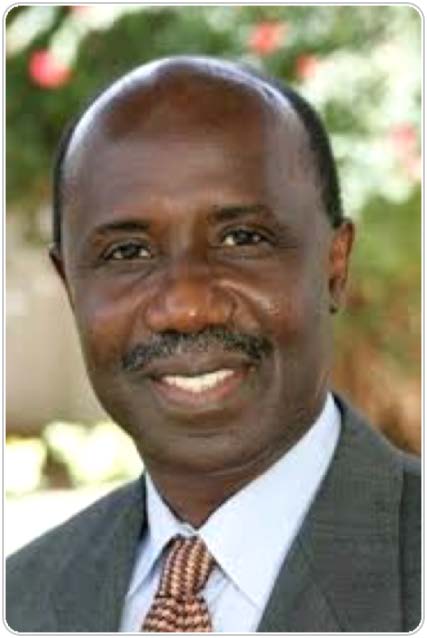 Akwasi Aidoo is a Senior Fellow at Humanity United, a social justice foundation dedicated to addressing systemic conditions for peace and freedom. Prior to that, Akwasi was founding Executive Director of TrustAfrica, a foundation that advances equitable development in Africa. Akwasi’s professional life in the last forty years has centered on social justice and philanthropy in Africa. His previous roles include head of the health and equity program of the Canadian International Development Research Center in West and Central Africa, head of the Ford Foundation’s work on human rights and participatory governance in West Africa, and director of the Ford Foundation’s Special Initiative for Africa. He currently chairs the Boards of the Fund for Global Human Rights, the Open Society Initiative for West Africa, and the Africa Regional Board of the Open Society Foundations; and previously served as trustee of several international organizations, including OXFAM America, Resource Alliance, Crime Prevention Centre of South Africa, Africa Governance Monitoring and Advocacy Project, Global Greengrants Fund, and Global Network Committee of the Ash Institute at Harvard University. Akwasi was educated in Ghana and the United States and received a PhD in Sociology of health equity from the University of Connecticut in 1985.
Dr. Albert Ruesga
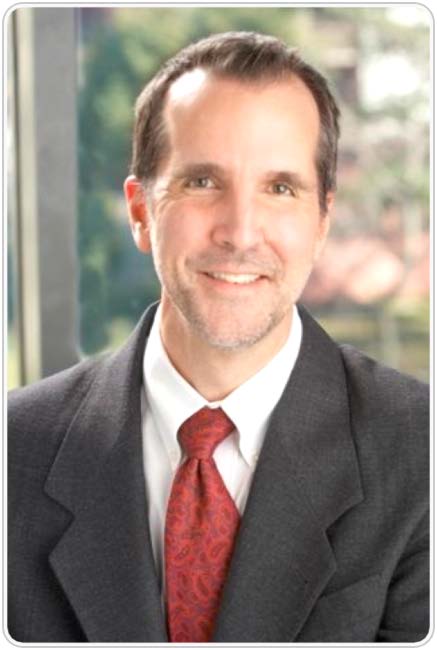 Albert Ruesga is currently the President and CEO of the Greater New Orleans Foundation, the community foundation serving the thirteen-parish region of metropolitan New Orleans. The Greater New Orleans Foundation is known for its leadership in the region after Hurricane Katrina and for its work in affordable housing, organizational effectiveness, and the environment. Albert serves on the board of Grantmakers for Effective Organizations as immediate past chair. He also serves on the steering committees for the Southern Organizing Working Group and the Working Group on Philanthropy for Social Justice and Peace. He served previously as board chair for Hispanics in Philanthropy. Albert earned his B.Sc. and Ph.D. at MIT and taught ethics, aesthetics, and philosophy of the social sciences at Gettysburg College before entering the world of philanthropy. An accomplished writer, his articles have appeared in the Oxford Handbook of Civil Society, Social Theory and Practice, The Journal of Popular Culture, and other publications. He was for many years a contributing writer to The Boston Book Review, and is the founding editor of the White Courtesy Telephone, a popular blog about nonprofits and philanthropy.
Ana Valérua Araujo
 Ana Araújo is the founding Executive Director of the Brazil Human Rights Fund, the first public interest Brazilian foundation dedicated to support grassroots organizations challenging human rights abuses. She has worked to help structure an effective human rights community, and to strengthen some of the most invisible segments of the Brazilian society. She has also been trying to help engage Brazilians on human rights causes and social justice philanthropy. She has helped establish the Network of Independent Funds for Social Justice – Brazil. Currently, she also serves at the steering committee of the International Human Rights Funder Group (IHRFG). Earlier, Ana had served as the Executive Director of the Rainforest Foundation US, in New York, developing advocacy, and policy strategies to promote the rights of Indigenous peoples in Latin American countries such as Guiana, Suriname, Colombia, Peru and Ecuador. Ana is a human rights lawyer with more than 20 years of experience in the field of indigenous rights and environmental law. She worked for the Nucleus for Indigenous Rights, one of the first organizations in the country to use legal instruments in the defense of Indigenous peoples. Ana is also a founding member of the Instituto Socioambiental (ISA) in Brazil. She was involved in some of the most important land rights cases in the country. Today, she is a member of ISA’s board of directors. In 1999, Time Magazine/CNN Network named her as one of “Latin America's Leaders for the New Millennium” for the ability to have an impact on society. She lives in São Paulo, Brazil.
Dr. Atallah Kuttab
 Atallah Kuttab is currently the Chairman and Founder of SAANED for Philanthropy Advisory in the Arab Region based in Jordan. Since April 2014 he is a Richard von Weizsaecker Fellow at Bosch Stiftung in Berlin. Attalah was a Deutsche Gesellschaft fuer Internationale Zusammenarbeit (GIZ) technical advisor for informal sector employment in Zambia for 3 years, and served with Save the Children for 11 years, most recently as Middle East Regional Manager, covering operations in Palestine, Egypt, Lebanon and Jordan. His management specialty areas are in staff management, fundraising and in forging private sector/ non-government sector relationships to further development efforts. In the period 2005-2011, he was Director General of the Welfare Association, the lead foundation supporting Palestinians primarily in Palestine and Lebanon. He is a Founding Member of Arab Human Rights Fund and Founding Member of the Arab Foundations Forum. He also a member of the Editorial Board of Alliance Magazine, member of the Board of Resource Alliance, Founding Board member of the Worldwide Initiatives for Grantmaker Support (WINGS), and since January 2013 as Chairman of the Board of WINGS.
Dr. Avila Kilmurray
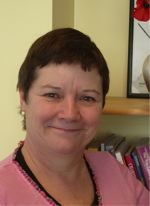 Between 1994-2014 Avila Kilmurray served as Director of the Community Foundation for Northern Ireland, recently leaving that position to join the Global Fund for Community Foundations as Director – Policy and Strategy with the Global Alliance for Community Philanthropy. She is a founder member of the Foundations for Peace Network. Previously she has held a range of positions over the years, including Development Officer with the Northern Ireland Council for Voluntary Action; Project Coordinator of the Rural Action Project (NI) and Women's Officer with the Amalgamated & General Workers' Union (Ireland). She has also served on the Executive Committee of the Irish Congress of Trade Unions and on the Industrial Development Board for Northern Ireland. She is a member of the Board of Conciliation Resources. In a private capacity Avila was a founder member of the Northern Ireland Women's Coalition and served on its negotiating team for the Belfast/Good Friday Agreement. Avila has been active in the Women's Movement in Northern Ireland since her involvement in establishing Derry Women's Aid in 1978, to provide shelter for victims of domestic violence. Avila has written extensively on Community Action, Women's Issues and Peacebuilding. In 2014 Avila was appointed an Associate Professor to the Transitional Justice Institute, University of Ulster. In 2004, as Director of the Community Foundation for Northern Ireland Avila became the first ever recipient of the Raymond Georis Prize for Innovative Philanthropy in Europe for the Foundation’s contribution towards building peace in Northern Ireland. Avila maintains an active interest in the power of philanthropy to make a difference in difficult circumstances.
Barry Knight
 Barry Knight is the director of the Webb Memorial Trust, which seeks new ways of tackling poverty. He is director of Centris, which identifies innovative solutions to old problems. He advises the Global Fund for Community Foundations and Foundations for Peace. Working as a consultant, Barry has advised foundations, including Ford, CS Mott, Bertelsmann, Sabanci, Bernard van Leer, Dynasty, and Potanin. As an evaluator, Barry trained as a statistician but takes an eclectic approach, and has pioneered new ways of thinking that have been published by the European Foundation Centre and WINGS. He played a big part in developing of the Community Foundation Atlas. Barry is a frequent speaker at conferences, is in demand as a facilitator, and has worked as a mediator to resolve longstanding conflicts. Barry has held appointments at Cambridge University and in the British Government. He has written 15 books and has published more than 100 articles on topics as diverse as economic development, crime and delinquency, family policy, children’s services, voluntary action, civil society and philanthropy. Barry serves on the editorial board of Alliance Magazine and has twice been guest editor. His most recent publication is called The society we want.
Dr. Christopher M. Harris
 Christopher Harris is currently Senior Consultant to the Norwegian Peacebuilding Resource Center (NOREF) Oslo. Until 2010 he served for a decade as the Senior Program Officer on Philanthropy at the Ford Foundation where he worked on how philanthropy can be best used as a tool for social justice and peace. Christopher supported the founding of Trust Africa and the Arab and Brazil Human Rights Funds. In 2007 he founded the international Working Group on Philanthropy for Social Justice and Peace, on which he still serves. Earlier he was a vice president at the Council on Foundations and served with the Council of Chief State School Officers, where he worked on improving US and state education policy for the most marginalized students. He has worked in the West Bank and Gaza with Palestinian educators, and in Somalia and Ethiopia analyzing emergency assistance. He has a doctorate from Harvard University and was on the editorial board of the Harvard Educational Review. He is currently on the editorial board of Alliance magazine (UK) and on several other boards. He has edited several books on education policy and written a number of articles and reports about philanthropy. He lives in Philadelphia (US).
Halima Mahomed
 Halima Mahomed is an independent philanthropy consultant whose work focuses on strengthening the narrative, practice and impact of philanthropy in Africa. Over the last 15 years, Halima has worked with and for institutions at the forefront of supporting and strengthening African philanthropy - from
the Ford Foundation to Trust Africa to the Global Fund for Community Foundations. She has been involved in several ground-breaking studies on the topic, ranging from social justice philanthropy to community philanthropy to high net-worth and corporate philanthropy, and was instrumental in developing the first African philanthropy knowledge base at TrustAfrica - and her writings have contributed in part to informing a new discourse and narrative on African philanthropy. She also serves on the Alliance magazine editorial board. Halima holds a Masters Degree in Development Studies from the University of the Witwatersrand - with a research focus on social justice philanthropy in South Africa.
Hania Aswad
 Hania Aswad is a ‘Social Justice’ and ‘Arts & Culture’ activist and practitioner who has over the past 20 years worked in a number of countries around the ‘Arab Region’ in a variety of roles ranging from development and humanitarian and emergency interventions. Working in a region where ‘social justice’ is constantly challenged, Hania had invested much of her energy, personally and professionally, in working closely with young Arab activists, practitioners and CSOs and in spreading the principles and practices of social justice and human rights; both as a practitioner and as a funder. Over the past years, she supported the initiation and development of a number of entities including NGOs, networks & philanthropic organizations as well as youth groups. Currently she is the CEO & Executive Director of the “Naseej Foundation – Resources for Community Youth Development in the Arab World”; a regional foundation registered in Belgium and Jordan, reaching out to more than 18 Arab countries. The foundation aims to unleash the potential of youth, communities and civil society organizations and structures, to collectively engage in achieving real & sustainable development impact and change.
Kamala Chandrakirana
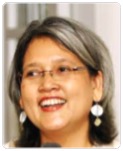 Kamala Chandrakirana was at the forefront of activism on women’s human rights and social justice issues in Indonesia as the country charted a new pathway after three decades of authoritarianism. While leading a presidential commission on violence against women, she initiated, in 2001, a women’s fund based on partnerships with the arts community and socially-conscious corporations to support women victims/survivors of violence. Kamala continues to integrate the urgency of resource mobilization in her work, including as a member of the UN Human Rights Council’s Working Group on discrimination against women, and as a founder of women’s alliances on peace and security (APWAPS) and on equality and justice in the Muslim family (Musawah). In 2014, Kamala joined the board of the Urgent Action Fund for Women’s Human Rights. Since 2010, Kamala chairs the board of Indonesia for Humanity, an indigenous small grantmaking foundation established in 1995 by leaders of the country’s civil society. As a member of a national coalition on truth and justice on past human rights violations, the foundation is currently accessing funds from a government program on poverty and social inclusion to support the healing and empowerment of victim/survivor communities where gross violations occurred between 1965 and 1998.
Lisa Jordan
 Lisa Jordanis is Senior Director Strategy and Learning at Porticus. Lisa has worked on strengthening democracy and civil society through positions with NGOs, governments and private philanthropic foundations for twenty years. Before joining Porticus, Lisa was Executive Director of the Bernard van Leer Foundation in The Netherlands. In this position she oversaw programs and operations that impact over a million disadvantaged young children every year and helped move the foundation from a charitable foundation to one focused on social change for young children. She is a well-known speaker, author and applied specialist in the fields of democracy, civil society, good governance, NGO accountability, and globalization. Lisa served for nine years with the Ford Foundation as Acting Director and Deputy Director of the Governance and Civil Society Unit. She has acted as a consultant for numerous foundations in the fields of development and environment and has published peer reviewed articles in Dutch, English and Spanish on early childhood, globalization and NGO accountability. She graduated cum laude in 1992 with a Master’s Degree in Development Studies from the Institute of Social Studies in The Hague, Netherlands.
Loren Harris
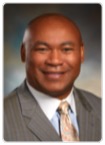 Loren Harris is director of Family Economic Security at the W.K. Kellogg Foundation in Battle Creek, Michigan. His role involves identifying and nurturing opportunities for positive systemic change within communities and executing programming efforts aligned with the foundation’s organizational direction. Before joining the foundation in 2014, Loren was the founder and CEO of KIREN Legacy Enterprises, a social enterprise firm in Englewood, New Jersey. In that position he developed national and regional projects aimed at improving the impact of philanthropic initiatives, including those focused on the well-being and self-sufficiency of men and boys of color in urban communities. Prior to that, Loren was a program officer at the Ford Foundation in New York, where his portfolio included projects in adolescent reproductive health and youth engagement. He also served as an associate program officer for the Charles Stewart Mott Foundation in Flint, Michigan and as director of youth employment programs at the Stanley M. Isaacs Neighborhood Center in New York. Loren has served as an expert panelist for the U.S. Department of Health and Human Services and also as a board member for The Brotherhood/Sister Sol and the Levitt Foundation in New York. He holds a master’s degree in public administration from Fairleigh Dickinson University in Hackensack, New Jersey, with an emphasis on nonprofit management and administration.
Sarah Mukasa
 Sarah Mukasa works as the Director of Programmes at The African Women’s Development Fund (AWDF). Prior to this she worked at Akina Mama wa Afrika as the Programmes Manager for Eastern Africa. Sarah is a feminist activist with extensive experience of advocacy at international, regional, and national levels. She has participated in a number of key UN meetings, where she has coordinated advocacy strategies for the various women’s interest groups, including the African Women’s Caucus, and the Solidarity for African Women’s Rights, a campaign for the ratification and implementation of the Protocol to the African Charter on Human and People’s Rights on the Rights of Women in Africa. Sarah has worked in the UK with local and health authorities as a community development officer, developing services for minority ethnic communities in London and in particular refugees and asylum seekers. Sarah is also a trainer and facilitator specialising in the organisational development of NGOs, feminist theory and practice, and influencing policy. She has a special interest in the areas of race as it interfaces with gender, sexual rights and issues relating to the integrity of women’s bodies, as well as the institutional development of women’s rights organisations. She is a member of the Working Group of the African Feminist Forum. In August 2015, Sarah will be starting out in a new position with the Open Society Foundations for East Africa in Uganda.
Stephen Pittam
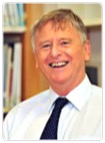 Stephen Pittam started his working life as a community development worker, first in Belfast, and later in London, and he also worked in Palestinian Refugee Camps in Jordan. These experiences shaped his future career. In 1986 he was appointed Assistant Trust Secretary to the Joseph Rowntree Charitable Trust (a UK based endowed foundation), later becoming its Deputy and in 2001 being appointed Trust Secretary. At different times he was responsible for the Trust’s programmes on racial justice, democracy, human rights and corporate accountability in the UK, and on peacebuilding in Ireland. During his tenure as Trust Secretary, JRCT was voted Britain’s Most Admired Charity (2007) and was awarded the Raymond Georis Prize for Innovative Philanthropy in Europe (2012). Stephen represented the Trust on the Council of the European Foundation Centre and the Network of European Foundations. On his retirement in 2012 he joined the global Board of the Global Greengrants Fund and was appointed the founding Chair of GGF’s European board. He is also a Board Member of the Global Fund for Community Foundations. In the UK he is a Trustee of the Polden Puckham Charitable Foundation and the British Institute of Human Rights and he serves on the Advisory Committee of the Centre for Applied Human Rights at York University. Locally he is Chair of the York Travellers Trust (working with Gypsies & Travellers) and of the York Human Rights City Network.
Sumitra Mishra
 Sumitra Mishra is the Country Director of iPartner India. iPartner India is a UK based charity that helps individuals, families, advisors, companies, charitable trusts and foundations connect with initiatives which currently fall outside the priorities of established agency funding. Sumitra’s key responsibility is to work with philanthropists to direct their giving towards addressing historical social inequity challenges and promote social justice and equality. In her previous roles she has worked with extremely vulnerable populations – persons with disabilities, women with disabilities, tribal groups, enslaved and abused women and children, facing multiple marginalization; enabling an environment of access to support, rights and dignity. Sumitra’s work in the South Asian context has been invaluable in forming, establishing and sustaining groups of people who have driven their own fight against injustice and created models of empowerment and equality within local communities. She sits on the Government of India Advisory Committee on Juvenile Justice and Reformation of Children in Conflict with Law. She is also an advisory member of the Disability Rights Group.
Suzanne E. Siskel
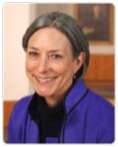 Suzanne E. Siskel is Executive Vice President and Chief Operating Officer of The Asia Foundation, overseeing its offices in 18 countries throughout Asia and San Francisco and Washington D.C., a post she has held since 2011. Previously she worked at the Ford Foundation in New York, directing its Social Justice Philanthropy program which sought to expand support for social development, human rights, peace building and equality and to build strong local and regional foundations engaged in this work in the United States and throughout the world. She joined Ford in 1990 as program officer for Rural Poverty and Resources in Indonesia and later headed its offices in Indonesia and the Philippines. Her work focused on strengthening civil society; promoting equitable economic development and community-based natural resources policy; and enhancing local capacity for socioeconomic research and analysis. She also directed Ford’s global Community and Resource Development unit, providing support to organizations working in community development, local philanthropy, sexuality and reproductive health, and environment. A social anthropologist, Suzanne has conducted research on the relationship between marginalization and shamanism among highland Maya in Chiapas, Mexico, and religious revival and poverty in northeast Brazil; and served as social development advisor to the Indonesian government.